Secrets are a Supply Chain
Designing ISO-Aligned Secret Lifecycles (Not Just Rotation)

Everyone rotates secrets.
Very few design secret lifecycle risk and that gap is where breaches live.
Most organizations believe secret rotation equals security. It doesn’t.
Rotation is a maintenance activity. Security is a system design outcome.
This article reframes secrets as first-class supply-chain artifacts; governed by contracts, events, blast radius, and standards, not cron jobs and hope.
Why This Matters (The Reality)
In every serious breach review, the same pattern emerges:
The secret was rotated
The vault did exist
Access was “restricted”
And yet:
The secret lived longer than the risk window
The blast radius was undefined
Revocation depended on humans
Audits validated screenshots, not behaviour
The failure was architectural, not operational.
The Shift in Thinking: Secrets as a Supply Chain
Treat secrets like:
TLS certificates
IAM trust relationships
API contracts
They have a lifecycle:
Creation
Distribution
Consumption
Expiration
Revocation
Forensics
If any of these are implicit, undocumented or manual, the system is fragile by design.
Core Design Principles (Non-Negotiable)
1️⃣ Secrets Are Expiring Contracts
Every secret must explicitly define:
Owner
Consumer
Environment
Maximum lifetime
Invalidation triggers
A secret without an expiry condition is a latent incident.
2️⃣ Rotation Must Be Event-Driven
Time-based rotation answers auditors. Event-based rotation answers attackers.
Rotation should be triggered by risk, not calendars:
| Event | Why |
|---|---|
| Auth code change | Exposure risk |
| Production deployment | Trust boundary reset |
| Incident/alert | Containment |
| Access policy change | Least privilege enforcement |
3️⃣ Blast Radius Is a First-Class Property
Every secret must answer one question clearly:
If this leaks, what breaks and what does not?
If you can’t answer that in one sentence, the secret is already unsafe.
Reference Architecture (End-to-End)
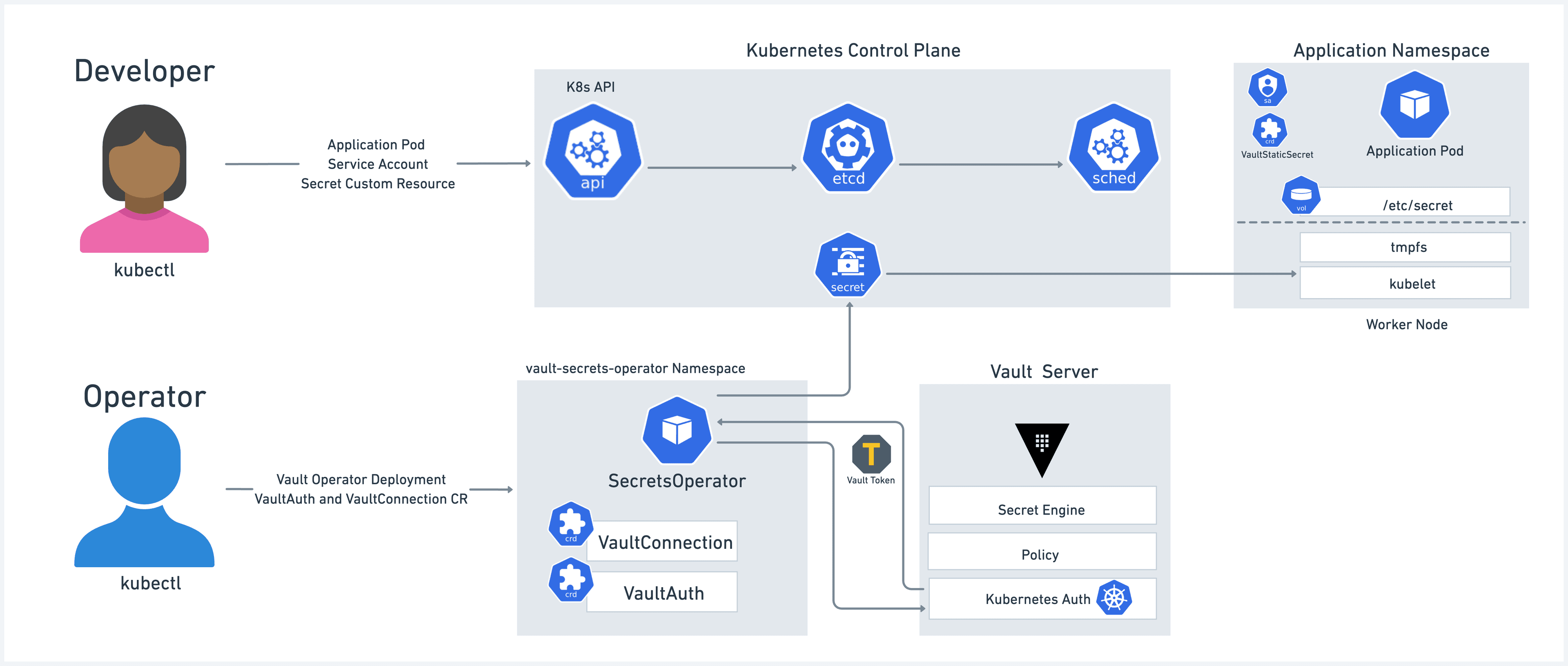
Architectural Components
Secrets Authority (Vault / Secrets Manager)
Contracts as Code (YAML)
CI/CD Pipelines (event triggers)
Policy Engine (blast-radius enforcement)
Runtime Injection (no persistence)
Audit Sink (immutable evidence)
This architecture makes compromise naturally expire.
Real-World Failure (Before)
A production API key leaked via application logs.
What actually happened:
Rotated every 30 days
Same key used across prod, staging, DR
Incident response revoked prod only
Staging continued leaking data silently
Root cause:
No lifecycle ownership
No blast-radius modelling
No event-driven revocation
Rotation existed. Security did not.
The Fix: Lifecycle-Aware Secret Design

Implementation
Step 1: Define Secret Contracts (Single Source of Truth)
contracts/payment-api.yaml
name: payment-api-key
owner: payments-team
environment: prod
services:
  - billing-service
  - reconciliation-worker
ttl: 86400
rotate_on:
  - commit
  - deployment
  - incident
blast_radius: minimal
compliance:
  iso_27001: A.9.2
  pci_dss: 3.6
This file is simultaneously:
Design documentation
Security policy input
Audit evidence
Step 2: Provision Secrets via Terraform
resource "random_password" "secret" {
  length  = 32
  special = false
}

resource "vault_generic_secret" "payment" {
  path = "secret/payment-api-key"

  data_json = jsonencode({
    value = random_password.secret.result
    owner = "payments-team"
    env   = "prod"
  })

  lifecycle {
    create_before_destroy = true
  }
}
✔ Immutable
✔ Auditable
✔ Automatically regenerated
Step 3: Enforce Blast Radius with Policy
path "secret/payment-api-key" {
  capabilities = ["read"]
  allowed_parameters = {
    env = ["prod"]
  }
}
A leaked secret cannot escape its boundary — even if exposed.
Step 4: Rotate on Risky Commits
on:
  push:
    paths:
      - "auth/**"
      - "security/**"

jobs:
  rotate:
    runs-on: ubuntu-latest
    steps:
      - run: |
          vault lease revoke -prefix secret/payment-api-key
Secrets die before attackers finish reconnaissance.
Step 5: Rotate on Production Deployments
on:
  deployment:
    environment: production

jobs:
  rotate:
    steps:
      - run: |
          vault lease revoke -prefix secret/payment-api-key
Every deploy = fresh trust boundary.
Step 6: Incident-Triggered Revocation
def handler(event, context):
    if event["severity"] == "CRITICAL":
        revoke("payment-api-key")
Connected to:
SIEM
PagerDuty
Cloud alerts
Human response time → zero.
Step 7: Runtime-Only Injection
env:
  PAYMENT_API_KEY: "{{ vault.secret.payment-api-key }}"
Never stored
Never baked into images
Auto-expires post-deploy
Testing = Evidence (Not Optional)
Blast Radius Test
SERVICE=analytics vault read secret/payment-api-key
# Permission denied
Expiry Test
sleep 86400
vault read secret/payment-api-key
# Lease expired
Tests double as audit artifacts.
ISO 27001 & PCI Mapping (By Design)
| Control | How It’s Satisfied |
|---|---|
| ISO A.9 Access Control | Policy-enforced blast radius |
| ISO A.12 Logging | Immutable pipeline + vault logs |
| ISO A.14 Secure SDLC | Event-driven rotation |
| PCI 3.6 | TTL, revocation, segregation |
Auditors don’t ask for screenshots. They inspect system behaviour.
What Changes Organizationally
Before
Manual rotations
Jira tickets
Screenshots
High MTTR
After
Zero tickets
Zero screenshots
Seconds to containment
Compliance as a side effect
Security stops being a department. It becomes a property of the system.
Final Takeaway
Mature security isn’t about adding more tools.
It’s about designing systems where trust naturally expires.
Secrets are not configuration. They are relationships, and every relationship needs:
boundaries
ownership
expiration
accountability


